Exchange Student Accommodation in Cape Town: What a Semester Actually Looks Like
We believe an exchange semester is too short to spend it lonely. You get four to six months in one of the most photographed cities on earth, and the difference between a good semester and an unforgettable one usually comes down to a single decision made months before you fly: where, and with whom, you live.
More students are making that decision than ever. The latest Open Doors report counted 298,180 American students studying abroad for academic credit in a single year, a 6 percent jump on the year before, and Cape Town keeps earning its place on that map. The University of Cape Town retained its title as Africa’s top-ranked university in the 2026 to 2027 US News Best Global Universities Rankings, and in September 2026 the city hosted the Times Higher Education World Academic Summit, the first time the event has ever been held on African soil. The academic world is looking at Cape Town right now. The students arriving with it all need somewhere to live.
The Housing Problem Every Exchange Student Hits
Exchange student accommodation in Cape Town comes down to a mismatch of timelines. A semester runs roughly four to six months. The standard South African rental market runs on 12-month leases, and UCT’s own accommodation office is upfront that demand for residence places far exceeds what the university can supply. That leaves most exchange students choosing between an overpriced holiday rental, a hostel with no privacy and nowhere to study, or a lease that outlives their visa by half a year.
There is a fourth option, and it was built for exactly this gap. Rent-A-Room has run furnished private rooms in shared houses in Observatory since 2004, with stays booked to your exact dates from four weeks up to a full year. Your booking starts when your semester starts and ends when it ends. If your exchange runs from mid-July to late November, that is precisely what you pay for. Stays of less than 4 months are billed monthly in USD, and stays of 4 months or more get a discounted monthly Rand rate, so most full semesters qualify for the discount.
What a Stay With Rent-A-Room Includes
A stay with Rent-A-Room means a private furnished room inside a shared student house, with the practical side of living abroad already handled. Rooms come in three categories, starting from $690 per month for a private single, with larger double rooms from $780 and ensuite rooms from $840 per month, and a discounted Rand rate for stays of 4 months or more. Every rate includes bedding and towels, regular professional cleaning with fresh linen changes, shared laundry, free WiFi, and a fully equipped shared kitchen. You arrive to a made-up bed, not a shopping list.
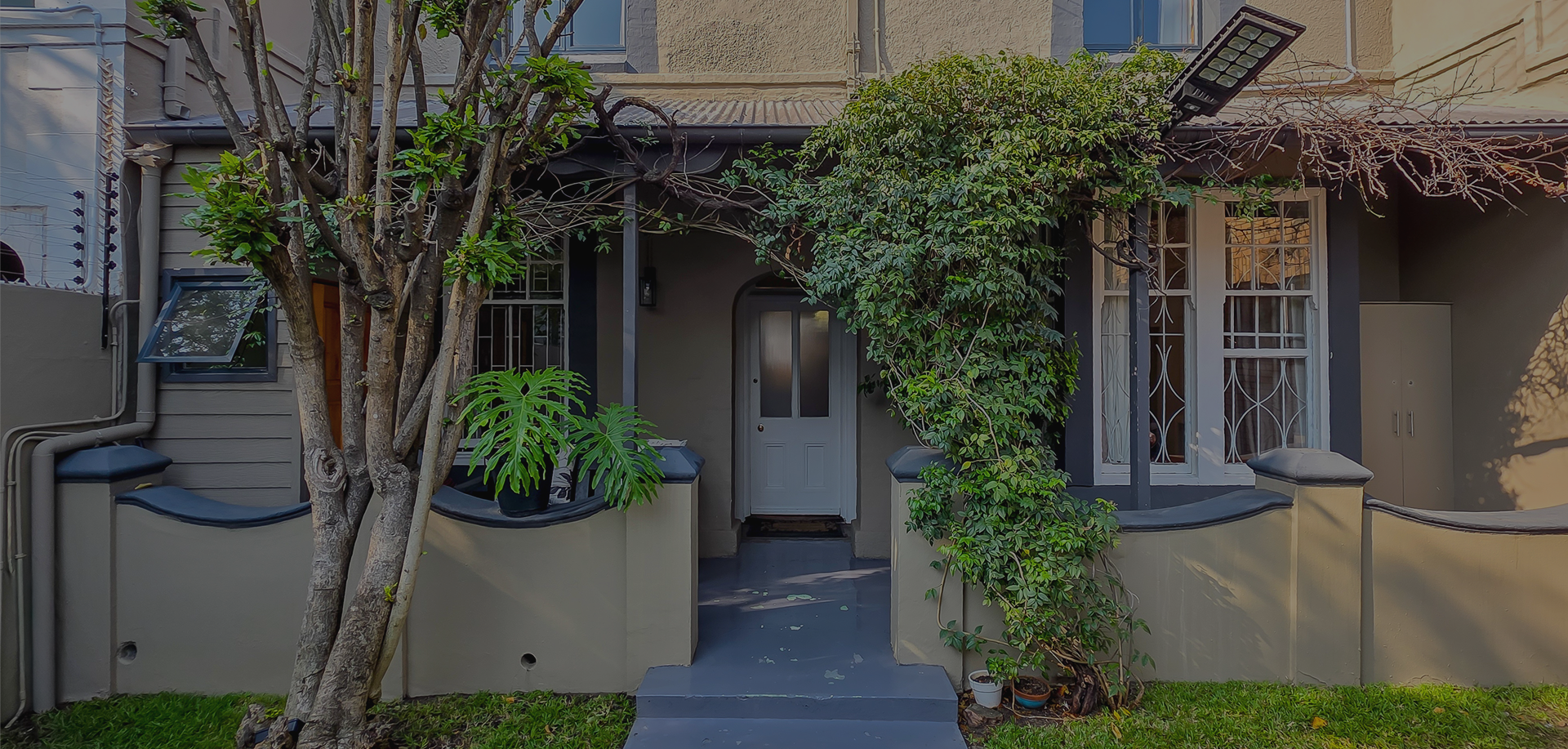
The room, though, is only the address. Across 96 rooms in 10 houses, your housemates are other exchange students, international students, and interns, most of them arriving and leaving on similar dates to yours. You have your own door to close when you need to study or decompress, and a kitchen full of people from around the world when you do not. One of them will suggest a weekend in Stellenbosch or a sunrise hike up Lion’s Head before your first week is out.
Behind that sits a local team who know every house. We communicate mainly by email and WhatsApp, so you have a written record of your booking and any request, maintenance is handled same-day wherever possible, and an after-hours airport shuttle and check-in can be arranged so a midnight landing still ends in your own bed.
The Load-Shedding Question, Answered for 2026
Ask anyone who studied in Cape Town a few years ago and they will mention load-shedding, the scheduled power cuts that once shaped daily life in South Africa. Here is the current picture: the national grid has now gone more than a year without load-shedding, and Eskom ran through the entire 2026 winter without cutting power once, its strongest performance in close to a decade.
We keep our infrastructure anyway. Every Rent-A-Room house except 317 Lower Main runs an inverter and backup lighting, because a stable year does not rewrite a decade of history, and an exchange student with an assignment due does not care about national averages. If the grid wobbles, your lights and your deadline survive it. That is the honest answer, and honest answers are the house policy.
Living in Observatory, Cape Town’s Student Neighbourhood
Observatory, known to everyone who lives there as Obs, is one of the closest student neighbourhoods to UCT’s main campuses, roughly 5 to 10 minutes away, with UCT’s medical campus and Groote Schuur Hospital sitting right on its edge. CPUT is about 10 to 15 minutes away, UWC around 25 to 35 minutes, and the city centre about 10 minutes. The neighbourhood itself is walkable, filled with cafés, restaurants, and everyday essentials, and Uber and Bolt make the rest of the city easy to reach.
On safety, we give exchange students the same straight answer we give their parents. The freestanding houses are secured with electric fencing and CCTV, with monitored alarms at all of them except 317 Lower Main, the 5 Howe Street lofts sit in an access-controlled building with 24-hour security and cameras, and every house is managed by our own team based in the neighbourhood. Obs itself is a lively city suburb that asks for the same street smarts as any student area in a big city, and every arrival gets an honest local briefing on how to move around it well.
When to Book Exchange Accommodation in Cape Town
The best time to book is the moment your exchange placement and dates are confirmed. Semester waves arrive in January, June to July, and September, and rooms across the 10 houses are booked to exact program dates, so the students who confirm early get the widest choice of room categories and houses. Booking runs through a real person on our team, who will answer questions from you and your family before anything is confirmed, and who can talk you through the best route from your house to your campus before you have even packed.
From there, the semester takes over. Your room will be ready the day you land. By the end of the first week you will know every name in the house, someone will have claimed the braai for Sunday, and Cape Town will have started to feel less like a destination and more like yours.